Corporate Responsibility: How to Measure and Report Biodiversity Impact Effectively
Why Biodiversity Is Now a Corporate Responsibility Issue
Biodiversity loss has shifted from a reputational concern to a material business risk — and regulators, investors, and supply chain partners are increasingly demanding proof that companies are taking it seriously. The collapse of ecosystems underpinning agriculture, water supply, and raw material production represents a direct threat to corporate value chains, not just a distant environmental problem.
The Taskforce on Nature-related Financial Disclosures (TNFD) published its final recommendations in 2023, signaling that nature-related risks are entering the same disclosure infrastructure as climate. Institutional investors managing trillions in assets have begun integrating biodiversity exposure into portfolio risk assessments. Meanwhile, the EU Biodiversity Strategy and emerging national regulations in markets like the UK are creating hard compliance timelines that companies operating in sensitive sectors simply cannot ignore.
For sustainability officers, the question is no longer whether to engage with biodiversity — it's how to do it credibly, at scale, and in a way that stands up to scrutiny.
The Core Challenge — Why Biodiversity Is Harder to Measure Than Carbon
Biodiversity is fundamentally more complex to quantify than carbon, because it has no single universal unit. Carbon accounting reduces to tonnes of CO₂ equivalent. Biodiversity does not reduce to anything that simple.
Species richness, habitat condition, ecological connectivity, and ecosystem services all describe different dimensions of biological health — and they don't move in lockstep. A site can show high species counts while still being ecologically degraded if the dominant species are generalists and the specialists have disappeared. Conversely, a restored wetland might score modestly on raw species numbers but deliver outsized ecosystem service value.
This complexity creates a genuine trap for corporate reporting teams: reaching for a single headline metric that looks clean in a sustainability report but misrepresents the underlying ecological reality. The honest position is that biodiversity measurement requires a basket of indicators, assessed at the site level, tracked over time — not a single number plugged into a dashboard.
This is precisely why structured protocols matter. Without a defined methodology, companies risk inconsistent baselines, unmeasurable targets, and disclosures that don't hold up to third-party verification.
Key Frameworks Shaping Corporate Biodiversity Reporting
Three frameworks are now defining what credible corporate biodiversity disclosure looks like, and sustainability teams need to understand how they relate to each other.
The TNFD framework operates at the disclosure level — it tells companies what to report and how to structure their nature-related risk and impact assessments. Its LEAP approach (Locate, Evaluate, Assess, Prepare) gives companies a logical sequence for identifying where their operations and supply chains intersect with sensitive ecosystems.
The Science-based Targets for Nature (SBTN) initiative sits one level deeper, helping companies set measurable targets that are grounded in what science says ecosystems actually need to recover. SBTN targets aren't aspirational statements — they require companies to demonstrate that their actions are sufficient to halt and reverse nature loss within specific geographies and timeframes.
Biodiversity Net Gain (BNG) is a more site-specific concept, originating in UK planning law but increasingly referenced in corporate land management contexts. BNG requires that development or land use change results in a measurable improvement in biodiversity compared to the pre-intervention baseline — typically expressed as a percentage uplift using a habitat-based metric. The distinction from simple biodiversity offsetting is important: BNG demands a net positive outcome, not just compensation for losses elsewhere.
These frameworks are complementary, not competing. TNFD provides the reporting architecture; SBTN provides the target-setting logic; BNG provides a site-level accounting mechanism.
What a Robust Biodiversity Monitoring Protocol Looks Like
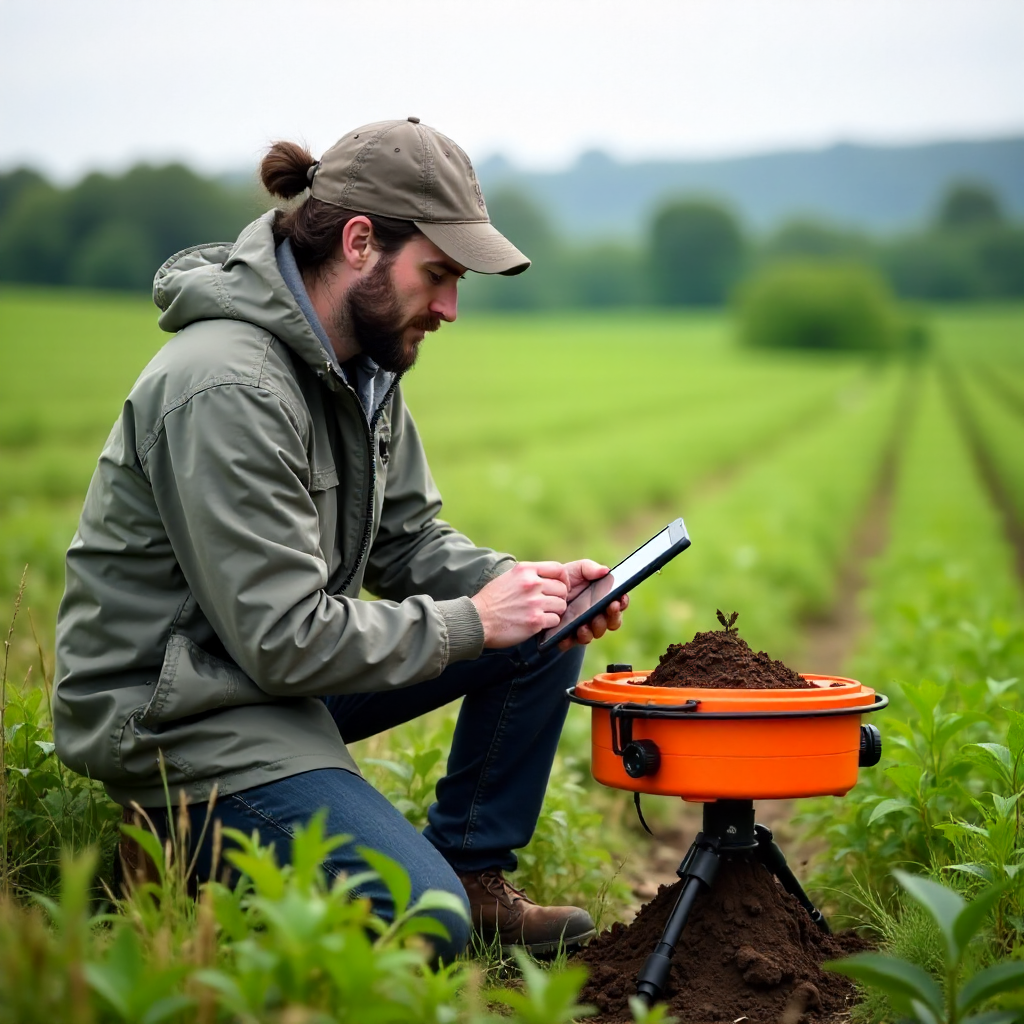
A credible biodiversity monitoring protocol combines standardized data collection methods, ecologically meaningful indicators, and a clear chain of custody from field data to reported metrics. The Element-E biodiversity monitoring protocol is designed precisely to meet this need — providing a structured, repeatable methodology that generates data compatible with TNFD and SBTN reporting requirements.
What separates a robust protocol from a one-off survey is repeatability and comparability. The protocol must define:
- Baseline assessment criteria — what ecological condition looks like before any intervention, using standardized habitat condition indicators
- Indicator selection — which species groups, vegetation metrics, or soil health parameters will be tracked, and why they are ecologically relevant to the site type
- Monitoring frequency — how often data is collected to detect meaningful change rather than seasonal noise
- Verification standards — how data quality is assured and how results can be independently validated
The Element-E protocol applies this structure across agricultural and semi-natural land, making it particularly relevant for companies with supply chain exposure to farmland. It captures species richness, habitat structure, and functional diversity in ways that can be aggregated upward into portfolio-level biodiversity accounts — closing the gap between field ecology and boardroom reporting.
Naturetech Tools That Make Measurement Scalable
Technology has made it possible to gather reliable biodiversity data at a scale that was impractical five years ago. Environmental DNA (eDNA) monitoring — the analysis of genetic material shed by organisms into water or soil — can detect the presence of species across entire catchments without requiring direct observation. A single water sample can reveal which fish, amphibians, or invertebrates are present in a river system, with accuracy that rivals traditional survey methods.
Acoustic monitoring uses automated sensors to record soundscapes, which ecologists can then analyze for bird, bat, and insect activity. Combined with machine learning classifiers, acoustic data can produce species-level biodiversity indices across large land areas at a fraction of the cost of manual surveys.
Remote sensing — satellite and drone imagery processed with spectral analysis — tracks vegetation health, habitat fragmentation, and land cover change at landscape scale. For companies managing or sourcing from large agricultural areas, remote sensing provides the spatial context that ground-level surveys alone cannot deliver.
The practical value of these naturetech tools is not just efficiency — it's consistency. Automated sensors and standardized eDNA protocols reduce observer bias and make it possible to compare data across sites, years, and geographies in ways that traditional ecological surveys often cannot.
Integrating Biodiversity Metrics Into ESG and Sustainability Reports
Translating field monitoring data into reportable ESG metrics requires deliberate design choices — and some honest acknowledgment of what the data can and cannot claim.
The starting point is aligning your indicators to the disclosure framework you're reporting against. TNFD-aligned reporting requires companies to disclose their dependencies and impacts on ecosystem services, their exposure to nature-related risks, and the targets and metrics they're using to manage them. That means your monitoring protocol needs to generate data that maps to these categories — not just raw species lists.
Practically, this means working backward from the report to the measurement design. If your TNFD disclosure needs to show progress against a habitat condition target, your monitoring protocol needs to track the specific indicators that define habitat condition — and track them consistently year over year.
For companies integrating biodiversity into existing corporate ESG reporting, the most common mistake is treating biodiversity as a qualitative narrative section rather than a quantified performance indicator. Investors and regulators are increasingly expecting the same rigor applied to carbon — baselines, targets, progress metrics, and third-party verification. Biodiversity data collected through a structured protocol like Element-E can support this level of disclosure; anecdotal project descriptions cannot.
Starting Points for Companies at Different Stages of the Journey
Where a company starts depends on what it already knows about its biodiversity footprint — and honest self-assessment here is more valuable than ambitious positioning.
Stage 1 — Mapping and baseline: If your company has no existing biodiversity data, the first step is a materiality screen using the TNFD LEAP approach. Identify which sites and supply chain geographies overlap with biodiversity-sensitive areas. Commission baseline habitat surveys using a standardized protocol. For agricultural supply chains, this means working with sustainable agriculture partners to assess farm-level habitat condition across key sourcing regions.
Stage 2 — Target setting: Once you have baseline data, use the SBTN framework to set targets that are geographically specific and ecologically grounded. Avoid generic commitments like "protect X hectares" without specifying the ecological condition of what's being protected. Nature-based solutions can be part of the target pathway — but only if they're designed to deliver measurable biodiversity outcomes, not just carbon co-benefits.
Stage 3 — Disclosure: With monitoring data and targets in place, structure your TNFD-aligned disclosure. Report against your indicators, show year-on-year progress, and be transparent about uncertainty — including sites where data quality is still being improved. Credibility comes from methodological honesty, not from projecting certainty you don't have.
The companies making the most meaningful progress on biodiversity aren't necessarily those with the largest programs. They're the ones with the clearest methodology, the most consistent data, and the discipline to report what they actually know.
Frequently Asked Questions
What is the difference between biodiversity offsetting and Biodiversity Net Gain?
Biodiversity offsetting compensates for losses at one site by funding conservation elsewhere — it aims for no net loss. Biodiversity Net Gain sets a higher bar: the outcome must be measurably better than the pre-development baseline, typically requiring at least a 10% uplift in habitat biodiversity units. BNG is now mandatory for most developments in England under the Environment Act 2021.
How does the Element-E protocol compare to other biodiversity monitoring standards?
The Element-E protocol is designed specifically for agricultural and semi-natural land contexts, with an emphasis on generating data that is both ecologically rigorous and compatible with corporate ESG reporting frameworks. Unlike some general ecological survey standards, it is structured to produce repeatable, comparable outputs across sites and reporting periods — which is the core requirement for credible corporate disclosure.
Can biodiversity impact be reported alongside carbon in an integrated ESG report?
Yes — and this is increasingly expected. TNFD and SBTN are designed to sit alongside climate frameworks like TCFD and the Science Based Targets initiative. The key is ensuring that biodiversity metrics are reported with the same methodological rigor as carbon data, including clear baselines, defined indicators, and independent verification where possible.
What data do companies need to begin a biodiversity baseline assessment?
At minimum: the geographic locations of owned or leased land and key supply chain sourcing areas, proximity data for sensitive habitats or protected areas (available from tools like the IBAT database), and access to sites for initial habitat condition surveys. eDNA sampling and remote sensing can supplement ground-level data where access is limited.
How does sustainable agriculture intersect with corporate biodiversity commitments?
Agricultural supply chains are often the largest component of a food, beverage, or consumer goods company's biodiversity footprint. Sustainable agriculture practices — cover cropping, reduced tillage, hedgerow restoration, integrated pest management — directly improve habitat condition and species richness on farmland. Measuring and verifying these outcomes at the farm level, using protocols like Element-E, is how companies convert supplier engagement programs into credible biodiversity data that supports TNFD and SBTN reporting.