Biodiversity Offsetting: Can Businesses Really Compensate for Nature Loss?
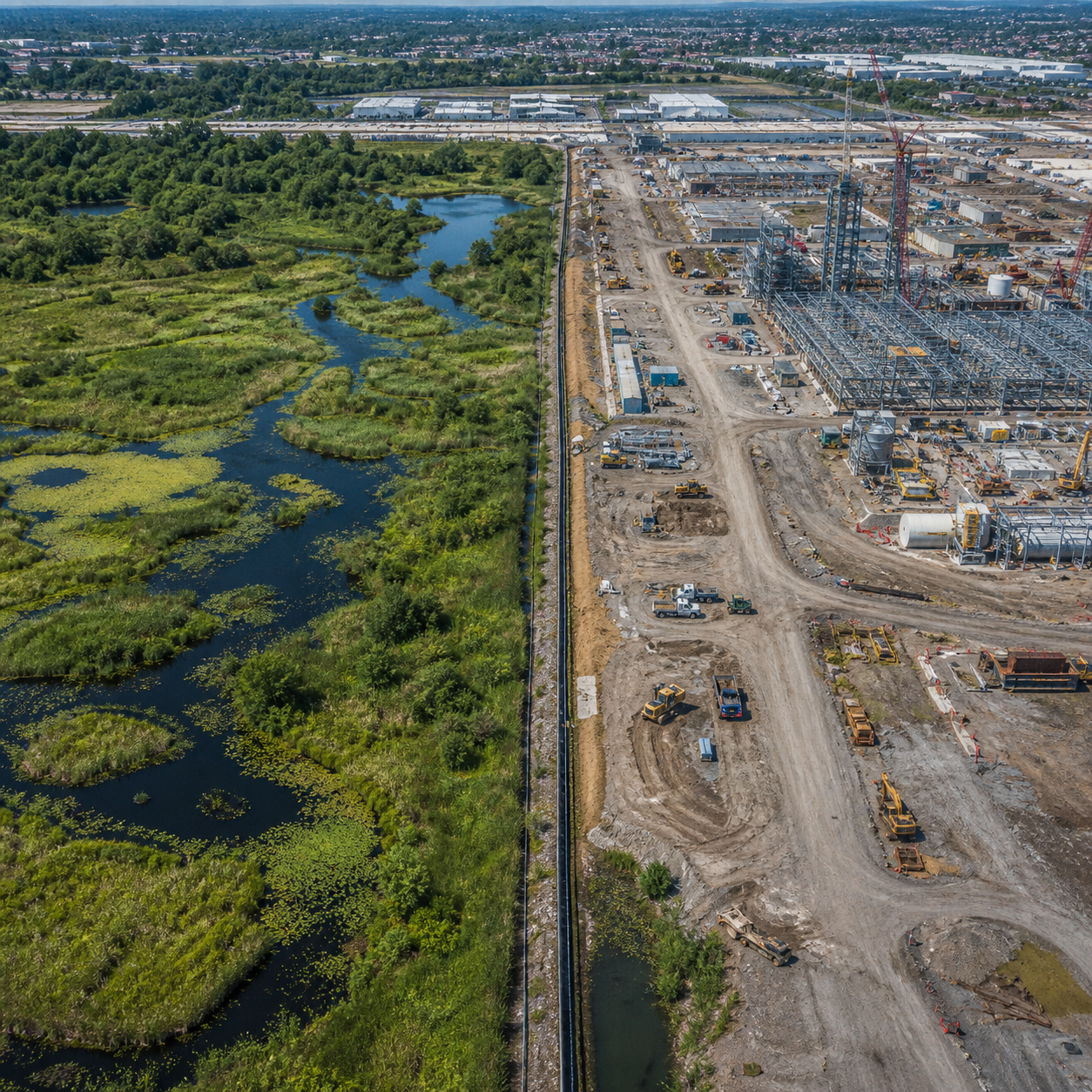
A road gets built through ancient woodland. A data center replaces a wildflower meadow. A port expansion fills an estuary. In each case, the developer points to a biodiversity offset — a patch of habitat created or restored somewhere else — and declares the ecological books balanced. But are they?
Biodiversity offsetting sits at an uncomfortable intersection between ecological reality and economic pragmatism. For sustainability professionals, ecologists, and policy-aware businesses, understanding how it actually works — and where it routinely fails — is no longer optional. Regulatory pressure is mounting, and the scrutiny of offset claims is intensifying.
What Is Biodiversity Offsetting and How Does It Work?
Biodiversity offsetting is a mechanism that allows developers to compensate for unavoidable habitat damage by creating, restoring, or enhancing equivalent habitats elsewhere. The underlying logic is that nature loss at one site can be counterbalanced by nature gain at another, leaving overall biodiversity no worse off.
The concept only makes sense within a broader decision-making sequence called the mitigation hierarchy. This framework requires developers to first avoid impacts, then reduce them, then restore on-site, and only then — as a genuine last resort — offset residual damage. Offsetting is not a license to destroy; it is supposed to be the final step when all other options have been exhausted.
In practice, the mitigation hierarchy is frequently compressed. Avoidance is inconvenient. Restoration is slow and expensive. Offsetting, by contrast, can be purchased, logged in a spreadsheet, and presented to a regulator. That convenience is precisely what makes it controversial.
The underlying value framework draws on ecosystem services — the benefits that functioning habitats provide, from carbon sequestration and flood regulation to pollination and water filtration. Offsetting attempts to quantify these services and transfer their provision from a damaged site to a compensating one. Whether that transfer is genuinely equivalent is the central question the entire system depends on answering honestly.
The Policy Landscape Driving Corporate Offsetting
Businesses are increasingly compelled toward formal offsetting commitments by a convergence of regulation and voluntary frameworks. The UK's Biodiversity Net Gain (BNG) mandate, which became legally required for most new developments in 2024, is among the most prescriptive examples globally — requiring a measurable 10% uplift in biodiversity value above the pre-development baseline.
At the corporate level, the Taskforce on Nature-related Financial Disclosures (TNFD) and the Science Based Targets Network (SBTN) are reshaping how companies measure and report their nature dependencies and impacts. These frameworks push businesses toward setting credible targets and disclosing the methods behind their corporate nature commitments — including how offsets are calculated and verified.
The policy direction is clear: vague pledges to "protect nature" are giving way to demands for quantified, auditable outcomes. That shift places biodiversity monitoring at the center of corporate accountability, not the periphery.
How Biodiversity Is Measured — and Why That Matters
Offset credibility depends entirely on measurement. Without robust, standardized biodiversity metrics, claims of no net loss are essentially unverifiable assertions.
Most offset schemes use some version of biodiversity units — composite scores that combine habitat area, condition, and ecological distinctiveness into a single tradeable figure. The UK's Biodiversity Metric (currently version 4.0, developed by Natural England) is one of the more developed examples, assigning unit values to different habitat types based on their relative ecological significance.
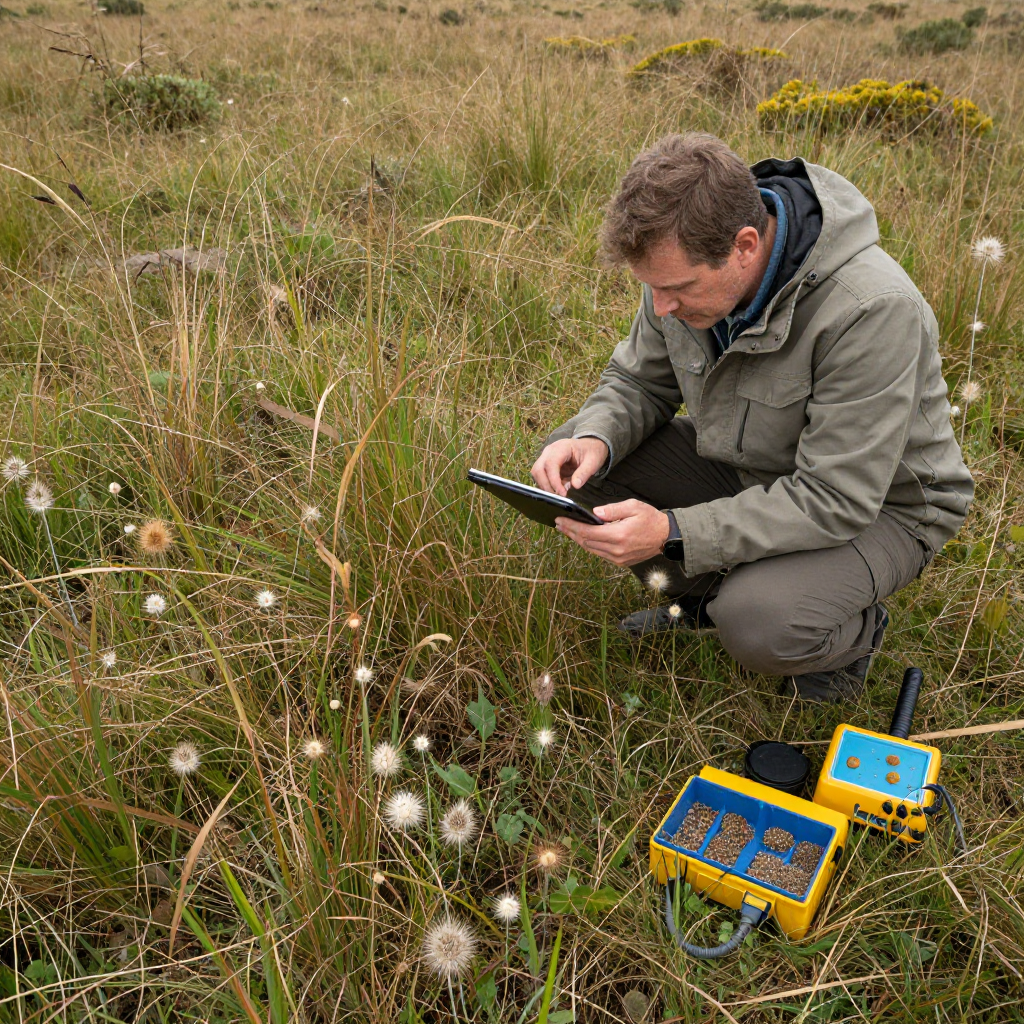
The challenge is that biodiversity is not a single variable. A woodland is not just trees — it is a layered system of soil fungi, invertebrates, nesting birds, epiphytes, and deadwood. Collapsing that complexity into a unit score inevitably involves trade-offs and assumptions. A high unit score on paper does not guarantee a functioning ecosystem on the ground.
This is why the choice of metric matters enormously. Poorly designed metrics can be gamed. A developer who selects a baseline survey methodology that underestimates existing habitat quality will generate inflated offset requirements on paper — but may actually be delivering less than the numbers suggest. Independent baseline assessment and standardized survey protocols are non-negotiable for any credible scheme.
The Critical Role of Biodiversity Monitoring in Offset Verification
Long-term biodiversity monitoring is the linchpin of any legitimate offset scheme. Without it, a restored habitat is just a promise — and promises degrade faster than ancient woodland.
Offset sites need to be monitored across ecologically meaningful timescales. Grassland restoration may take 15–25 years to reach target condition. Woodland creation can take decades longer. A single post-implementation survey, conducted a year after planting, tells you almost nothing about whether the offset will deliver the biodiversity value it was credited for.
Robust biodiversity monitoring for offset verification should include baseline surveys before intervention, repeated condition assessments at defined intervals, species-level data collection where relevant, and independent third-party review. Remote sensing tools — satellite imagery, LiDAR, acoustic monitoring — are increasingly used to supplement field surveys and reduce the cost of long-term tracking.
The governance question matters too. Who commissions the monitoring? Who reviews the data? Who enforces remedial action if an offset site fails? In many current schemes, the answer to all three questions is effectively the developer — a structural conflict of interest that undermines the entire verification chain. Credible offsetting requires independent monitoring bodies with genuine enforcement powers, not self-reported compliance tick-boxes.
Where Biodiversity Offsetting Falls Short
Offsetting has real, well-documented failure modes that sustainability professionals need to understand before treating it as a reliable tool.
Additionality failures are perhaps the most fundamental. Additionality means that the conservation benefit delivered by an offset must be genuinely new — it must not have happened anyway without the offset funding. In practice, many offset projects involve habitats that were already protected or on a trajectory of improvement. Crediting these as compensation for fresh damage is circular: no real gain occurs, but the developer's ledger shows a surplus.
The like-for-like equivalence problem is equally serious. Replacing a lowland raised bog with a species-rich grassland somewhere else is not ecologically equivalent, regardless of what the unit scores say. Unique, irreplaceable habitats — ancient woodlands, upland peat, chalk streams — cannot be recreated on any practical timescale. Offsetting logic breaks down entirely for habitats with long ecological histories that cannot be manufactured.
Time lags compound the problem. Development impacts are immediate. Habitat restoration is slow, uncertain, and subject to failure through drought, invasive species, or inadequate management. The ecological debt incurred during the restoration period is rarely accounted for in offset calculations.
Finally, there is the greenwashing risk. Offsetting can be used — deliberately or through institutional inertia — to justify ongoing habitat destruction by giving it a veneer of environmental responsibility. When offsetting becomes the first conversation rather than the last resort, the mitigation hierarchy has effectively been abandoned.
What Good Offsetting Looks Like in Practice
Credible offset programs share a recognizable set of characteristics that distinguish genuine compensation from paper compliance.
- Strict application of the mitigation hierarchy — offsets are only considered after avoidance and reduction options have been genuinely exhausted and documented.
- Like-for-like habitat matching — offset habitats are ecologically comparable to what was lost, with explicit limits on what can be traded across habitat types.
- Independent baseline surveys — pre-development and pre-restoration assessments are conducted by ecologists with no financial stake in the outcome.
- Long-term monitoring commitments — offset sites are monitored for a minimum of 30 years in well-designed schemes, with legally binding management agreements.
- Transparent public reporting — monitoring data is publicly accessible, not held internally by the developer or offset provider.
- Habitat banking governance — where habitat banking is used as the market mechanism, the registry of credits, their ecological basis, and their retirement records are independently audited.
The UK's BNG framework attempts to embed several of these features through mandatory 30-year habitat management agreements and a national biodiversity gain register. Whether enforcement keeps pace with the volume of developments using the system remains an open question — and one that biodiversity monitoring data will eventually answer.
Can Offsetting Ever Truly Replace What Is Lost?
Honestly: no, not always. But that is not quite the right question.
The more useful question is whether offsetting, placed correctly at the end of the mitigation hierarchy and backed by rigorous, independent biodiversity monitoring, can deliver meaningful conservation outcomes for habitats that are genuinely replaceable. For some habitat types and some development contexts, the answer is cautiously yes.
The No Net Loss principle, when applied with integrity, can channel development funding into habitat creation and restoration that would otherwise not occur. Habitat banking, when governed transparently, can aggregate offset investment at a landscape scale — which is often more ecologically valuable than fragmented on-site mitigation.
But offsetting cannot substitute for a functioning planning system that actually prevents damaging development in the first place. It cannot compensate for the loss of irreplaceable habitats. And it cannot work without the monitoring infrastructure to verify that offset sites are delivering what they promised, years and decades after the development has moved on.
For businesses navigating TNFD disclosures, SBTN targets, and BNG compliance, the practical message is this: treat offsetting as what it is — a last resort with a credibility problem that only rigorous measurement can solve. Invest in the monitoring. Demand the independence. And be honest about what the numbers can and cannot tell you.
Frequently Asked Questions
What is the difference between biodiversity offsetting and biodiversity net gain?
Biodiversity offsetting is the broader concept of compensating for habitat loss elsewhere. Biodiversity Net Gain (BNG) is a specific regulatory standard — most notably in the UK — that requires developments to leave biodiversity measurably better off than before, typically by at least 10%. BNG sets a higher bar than simple no net loss offsetting by requiring a demonstrable positive outcome, not just equivalence.
How do businesses calculate how many biodiversity units they need to offset?
Developers use standardized biodiversity metrics — such as the UK's Biodiversity Metric 4.0 — to assess the habitat area, condition, and distinctiveness of the development site before and after impact. The difference between pre- and post-development unit scores determines the offset requirement. Offset sites are then assessed using the same metric to calculate how many biodiversity units they can deliver.
What is additionality, and why is it so important for offsets?
Additionality means that an offset must deliver conservation benefits that would not have happened without the offset funding. If a habitat would have been protected or restored anyway, crediting it as an offset produces no real ecological gain. Additionality failures are one of the most common ways offset schemes underdeliver — and one of the hardest problems to verify without independent oversight.
How is biodiversity monitoring used to verify that offsets are working?
Biodiversity monitoring tracks habitat condition, species presence, and ecological function at offset sites over time, comparing outcomes against predicted targets. Effective verification requires independent surveyors, standardized protocols, repeated assessments across decades, and public reporting of results. Without long-term monitoring, there is no way to confirm whether an offset has delivered the biodiversity units it was credited for.
Can biodiversity offsetting be used to justify ongoing habitat destruction?
It can be — and this is one of the most serious criticisms of the mechanism. When offsetting is treated as a routine cost of doing business rather than a genuine last resort, it effectively subsidizes habitat destruction. Credible frameworks require developers to demonstrate that avoidance and reduction options were genuinely exhausted before offsetting is permitted. Without that discipline, offsetting becomes a license to destroy with extra paperwork.